Byta tillbaka: Swapping back in spring
Deciding when to put the summer tyres back on: weather talk, the end of the studded-tyre season, gambling against a late frost, and the regret when it snows the day after you swap.
It's spring, the roads are dry and the studs are rattling, but nobody trusts the weather. You get the proverbs, hedging and self-irony Swedes use around the spring swap, with a smug neighbour and a colleague who changed too early.
- 1
Det luktar vår.
You can smell spring.
Tip: The first mild day's cliché, said with real pleasure. No article: spring is the smell itself.
- 2
Nu har våren kommit på riktigt, va?
Spring's here for real now, isn't it?
Tip: Hopeful small talk inviting agreement. The tag at the end asks for a nod, and 'for real' is the everyday phrase for 'properly'.
- 3
En svala gör ingen sommar.
One swallow doesn't make a summer.
Tip: The proverb, word for word as in English, used to dampen early optimism. Typical from an older, cautious speaker.
- 4
Har du fortfarande dubbdäcken på?
Have you still got your studded tyres on?
Tip: The stranded particle at the end means 'fitted'. A neutral question, though it can carry a hint of 'already?' or 'still?'.
- 5
Jag väntar alltid till maj, då slipper jag gissa.
I always wait until May, then I don't have to guess.
Tip: Smug caution. The verb for being spared something is a key word learners miss; it is far more natural than 'don't need to'.
- 6
Pappa sa alltid att man ska vänta tills björkarna har musöron.
My dad always said you should wait until the birch trees have mouse ears.
Tip: Folk wisdom: the first tiny birch leaves, 'mouse ears', mark real spring. Traditionally about sowing, but people apply it to tyres too.
- 7
Det kan slå om hur snabbt som helst.
It can turn in no time at all.
Tip: 'Strike around' is the verb for weather changing suddenly. 'However fast as ever' is the Swedish way to say 'in no time'.
- 8
Det har kommit snö i maj förr.
We've had snow in May before.
Tip: The trump card in every spring tyre discussion. Snow 'comes' in Swedish; the last word means 'before, in the past'.
- 9
Det är fortfarande nattfrost, så jag väntar en vecka till.
There's still frost at night, so I'll wait another week.
Tip: Reasonable caution. Mild days, freezing nights: icy mornings are the real risk in spring.
- 10
Man ska inte ropa hej förrän man är över bäcken.
Don't count your chickens before they're hatched.
Tip: 'Don't shout hey until you're over the stream': the classic Swedish warning against early celebration.
- 11
Det är väl inte hela världen med lite snöblandat regn.
A bit of sleet isn't the end of the world, surely.
Tip: The particle asks for agreement and plays the risk down. 'Snow-mixed rain' is the forecasters' word for sleet.
- 12
Prognosen säger plusgrader resten av veckan.
The forecast says above zero for the rest of the week.
Tip: Temperatures are 'plus degrees' and 'minus degrees'. Quoting the forecast is how optimists justify swapping.
- 13
Det gäller att pricka in rätt vecka.
It's all about hitting the right week.
Tip: The particle verb 'dot in' means hit exactly, as when picking lottery numbers. 'It applies to' is the stock frame for 'the key thing is'.
- 14
Det är ett lotteri varje år.
It's a lottery every year.
Tip: Resigned weather talk. Neuter noun, with the time phrase at the end where it naturally sits.
- 15
Jag har bokat en tid på lördag, sen får vi se hur vädret blir.
I've booked a slot for Saturday, then we'll see what the weather does.
Tip: Hedging your bet. 'Then we get to see' is the relaxed way to leave a question open.
- 16
Jag har inte kommit mig för att byta än.
I haven't got round to swapping yet.
Tip: The reflexive phrase means 'get round to doing', a C2 favourite. Admits mild laziness without apology.
- 17
Efter mitten av april får man inte ha dubb kvar, om det inte är vinterväglag förstås.
After mid-April you can't keep studs on, unless the roads are wintry of course.
Tip: The rule in spoken form; the official wording also allows studs when wintry roads are expected. Rules are set by the transport authority and can change.
- 18
Dubbarna smattrar mot den torra asfalten.
The studs clatter on the dry tarmac.
Tip: The sound of spring on a studded car. The verb is onomatopoeic, for rain on a roof or gravel on metal; note the preposition 'against'.
- 19
Dubbarna slits ju bara i onödan på torr asfalt.
The studs only wear down for nothing on dry tarmac, you know.
Tip: The practical argument for swapping. The particle presents it as known; the middle phrase means 'needlessly' (not 'in vain', which is a different word).
- 20
Nu chansar jag och byter.
Right, I'm taking the chance and swapping.
Tip: The decision. The verb means 'take a gamble' and is very everyday; 'now' up front marks the moment.
- 21
Hellre en vecka för sent än en vecka för tidigt.
Better a week too late than a week too early.
Tip: Built on the 'rather ... than' pattern of many Swedish sayings. The cautious camp's motto.
- 22
De såg lite slitna ut redan i fjol.
They looked a bit worn even last year.
Tip: About summer tyres coming out of storage. 'Look out' is the particle verb for appearance; the last two words mean 'last year'.
- 23
Tvätta vinterhjulen innan du ställer undan dem, saltet äter på fälgarna.
Wash the winter wheels before you put them away, the salt eats into the rims.
Tip: Good advice for storage. 'Eat on' is how corrosion is described; 'put aside' is the particle verb for storing.
- 24
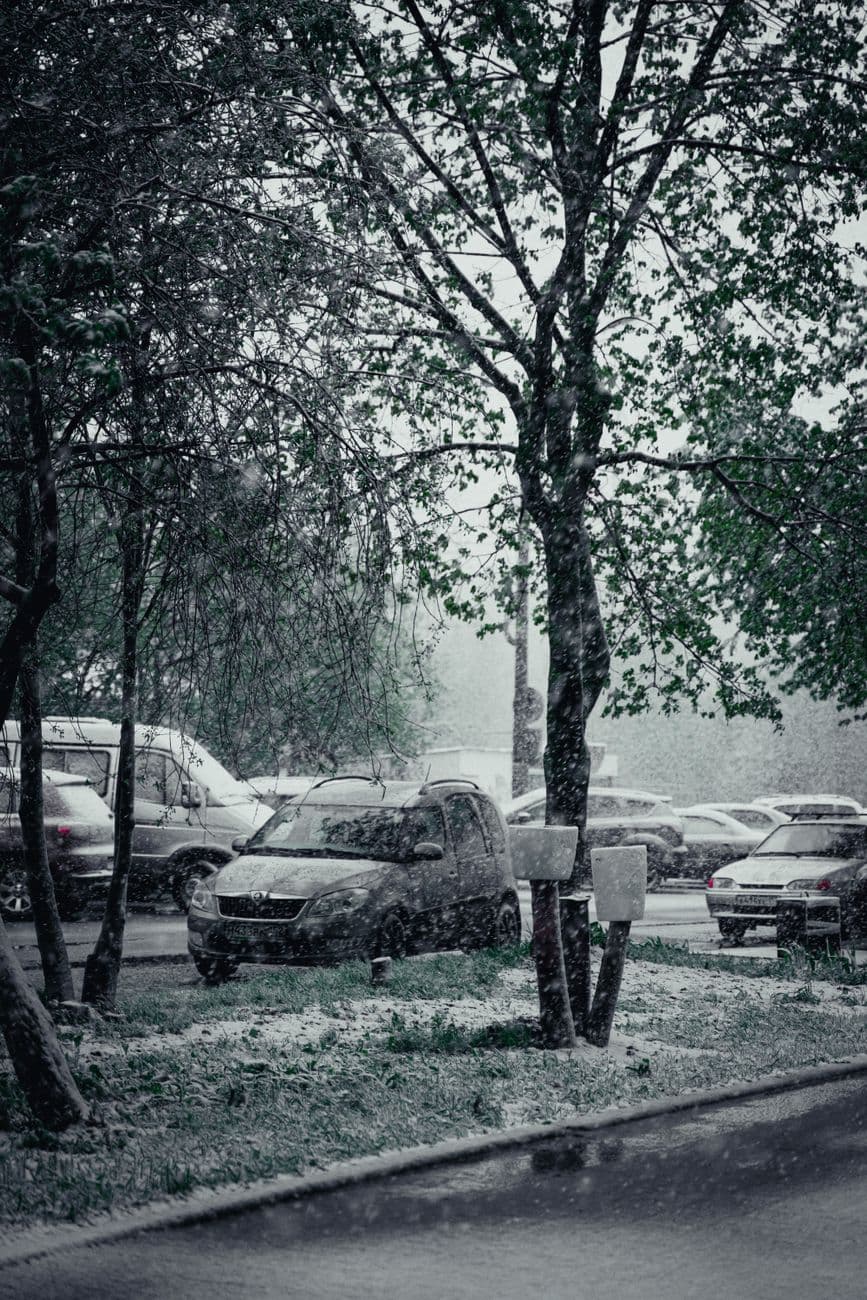
Klart det skulle snöa dagen efter att jag bytte.
Of course it had to snow the day after I swapped.
Tip: Bitter-comic fatalism. Opening with 'clear' and the 'had to' form says the universe was always going to do this.
- 25
Jag var visst lite för tidigt ute.
Seems I jumped the gun a bit.
Tip: 'Out too early' is the idiom; the adverb here means 'apparently', adding rueful self-irony.
- 26
Murphys lag, helt enkelt.
Murphy's law, plain and simple.
Tip: Borrowed from English and used just the same. Short, resigned reply to bad luck.
- 27
Jag skyller på väderappen, den lovade plusgrader.
I blame the weather app, it promised above zero.
Tip: 'Blame on' needs this preposition. Half-joking deflection.
- 28
Där fick jag för att jag var så ivrig.
Serves me right for being so eager.
Tip: 'There I got it': the fixed frame for admitting you deserved a setback. Laughing at yourself first takes the sting out of others' teasing.
- 29
Där tog jag ut våren i förskott.
I counted on spring a bit too soon.
Tip: Built on the idiom about claiming a win in advance, applied to the season. Witty, self-mocking.
- 30
Nu får jag ta bussen tills det har smält bort.
Now I'll have to take the bus until it's melted.
Tip: The modal here means 'have to'. 'Melt away' with a particle sounds more complete than the bare verb.
- 31
Det är bara att bita ihop.
Nothing for it but to grit your teeth.
Tip: 'Bite together': the go-to phrase for enduring something unpleasant. Supportive between colleagues.
- 32
Vad var det jag sa?
What did I tell you?
Tip: The smug neighbour's line. Cleft question with past tense, as in 'what was it that I said'. Friendly or insufferable depending on the grin.
- 33
Den som väntar på något gott väntar aldrig för länge.
Good things come to those who wait.
Tip: The full proverb, often cut off after the first half with a meaningful look. Smug when used on someone who didn't wait.