Första snön: Caught out on summer tyres
What Swedes say on the morning the first snow arrives and the car is still on summer tyres: disbelief, lame excuses, colleagues' teasing and the self-irony that turns it into a shared yearly joke.
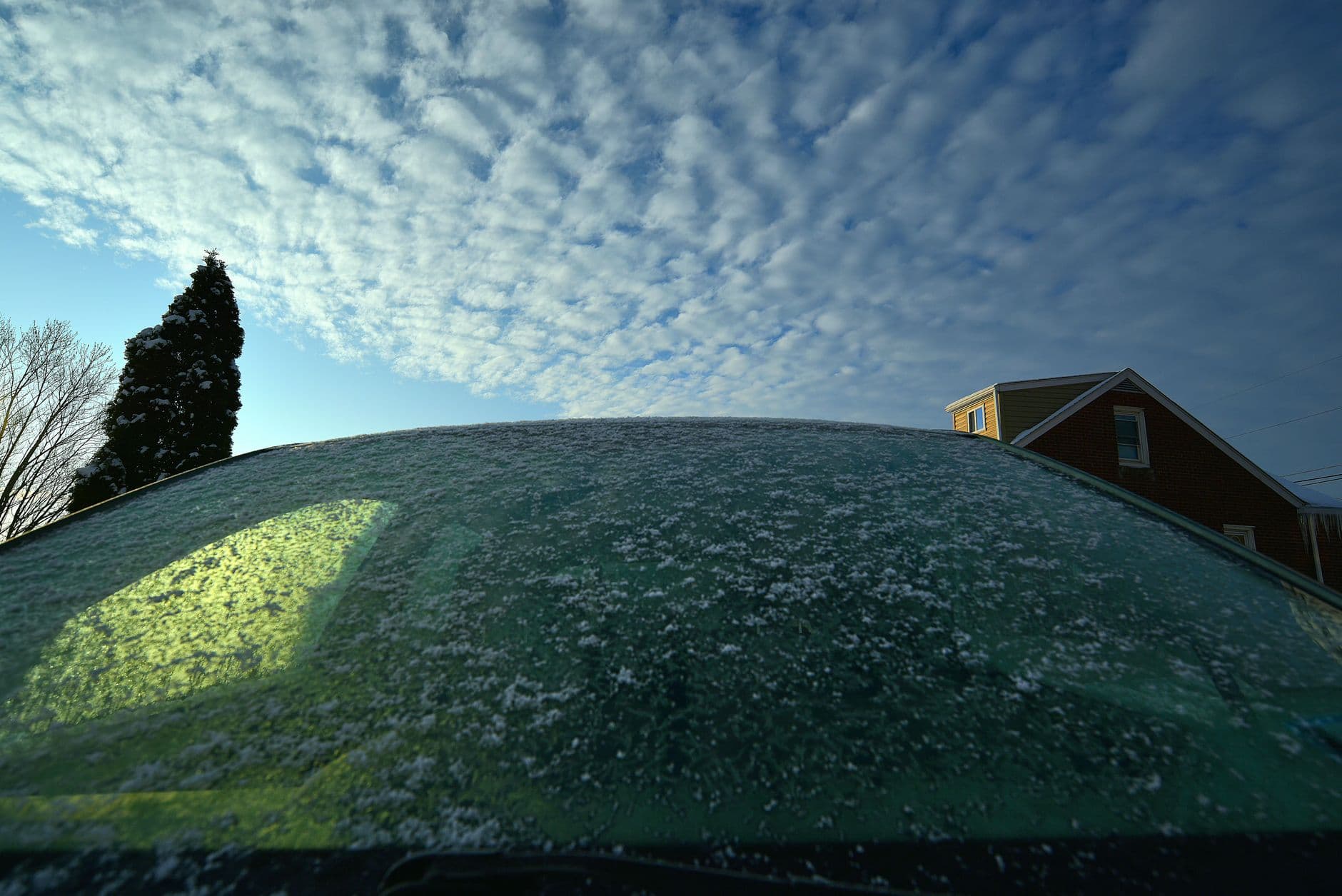
The first snowfall catches you on summer tyres, and the whole country seems to be in the same position. You get the spoken lines for the moment you look out of the window, the excuses, being teased at work, laughing at yourself and sorting out a way home.
- 1
Nej men det är inte sant, det har snöat.
Oh no, you're kidding me. It's actually snowed.
Tip: Disbelief at the window. Literally 'it isn't true', said about something that plainly is. Flat and weary rather than shocked.
- 2
Och jag som har sommardäcken kvar.
And here I am, still on summer tyres.
Tip: The 'and me who...' pattern is pure self-pity with a smile. No main verb is needed; learners tend to build a full sentence and lose the tone.
- 3
Där rök den planen.
Well, there goes that plan.
Tip: Literally 'there that scheme went up in smoke'. Casual and resigned, never formal. Note the past tense even though it is happening now.
- 4
Bilen blir stående i dag.
The car stays put today.
Tip: 'Become standing' is the natural way to say a vehicle is left unused. Sounds decided, not dramatic.
- 5
Jag tänker inte ge mig ut på sommardäck i det här.
I'm not venturing out on summer tyres in this.
Tip: 'Give myself out' is the idiom for setting off into bad conditions. 'I'm not planning to' here means a firm refusal.
- 6
Det är inte läge att chansa.
This isn't the moment to take chances.
Tip: 'Not the situation' is everyday shorthand for 'bad timing'. Common among younger and middle-aged speakers; sounds sensible, not preachy.
- 7
Jag skulle ju byta i helgen.
I was going to change them this weekend. (Meaning: honestly, I had a plan.)
Tip: The 'ju' turns a plan into an excuse: you present it as something the listener already knows. Expect no sympathy.
- 8
Det har varit så mycket nu.
There's just been so much going on lately.
Tip: The all-purpose Swedish excuse: vague, a little tired, impossible to argue with. 'Now' here means 'lately'.
- 9
Det var ju plusgrader hela förra veckan!
It was above freezing all last week!
Tip: 'Plus degrees' is how Swedes talk about mild days. The 'ju' asks the listener to agree it wasn't your fault.
- 10
De hade inte lovat snö förrän nästa vecka.
They hadn't forecast snow until next week.
Tip: Forecasts 'promise' weather in Swedish, good or bad. 'Not until' needs the second word for 'before'; a common learner slip is to use 'until' literally.
- 11
Man vill ju inte vara först heller.
Well, you don't want to be the first one either.
Tip: A face-saving excuse: switching too early is also frowned on (studs on dry roads, smug neighbours). 'Either' makes it sound like a reasonable balance.
- 12
Jag har inte hunnit, helt enkelt.
I just haven't got round to it, simple as that.
Tip: The verb means 'to have time to', so it covers 'got round to'. Adding 'simply' at the end makes it a shrug, not an apology.
- 13
Jaså, du kom med bussen i dag?
Oh, came in by bus today, did you? (Meaning: I know exactly why.)
Tip: Teasing dressed up as a question. The opening 'oh really' carries all the irony; the answer is obvious to both of you.
- 14
Jag gissar på sommardäck?
Summer tyres, I'm guessing?
Tip: Guessing an answer takes the particle 'on' in Swedish. Said with a rising tone it is mock detective work: you both know the answer already.
- 15
Ja, ja, strö lite salt i såren du.
Yeah, yeah, go on, rub it in.
Tip: The image is rubbing something stinging into an open wound. The tag 'you' at the end makes the imperative mock-grumpy rather than hostile.
- 16
Du får skylla dig själv.
Well, you've only got yourself to blame.
Tip: Blunt; fine between colleagues who like each other, harsh from a stranger. 'You get to blame yourself' is the idiom.
- 17
Lätt för dig att säga, du som har haft dubbdäck sen oktober.
Easy for you to say, you've had studs on since October.
Tip: The 'you who...' structure points a finger with a grin. Note the spoken short form of 'since'.
- 18
Skratta du bara.
Go on, laugh.
Tip: Imperative plus 'you' plus 'just': a grudging permission. Said with a half-smile it shows you can take a joke.
- 19
Det kommer som ett brev på posten.
Regular as clockwork. (Meaning: you get caught out every single year.)
Tip: 'Like a letter by mail': something utterly predictable. Teasing when said about a person's habits.
- 20
Du är inte ensam, om det är någon tröst.
You're not the only one, if it's any consolation.
Tip: Kind teasing that switches to comfort. 'Any' is the word for 'some' in a question-like clause.
- 21
Halva kontoret sitter i samma sits.
Half the office is in the same boat.
Tip: 'Sit in the same seat' is the everyday alternative to the boat image. Turns your bad luck into a shared one.
- 22
Det kommer som en överraskning varje år, det här med snön.
Every year it comes as a surprise, this snow business.
Tip: A national running joke: the press mocks road authorities and drivers alike for being 'surprised' by winter. The tail 'this thing with...' is typical of relaxed speech.
- 23
Jag gör det varje år, så det är väl en tradition vid det här laget.
I do it every year, so I suppose it's a tradition by now.
Tip: Self-irony that defuses the teasing. 'At this stage of the game' is the fixed phrase for 'by now'; the 'väl' adds a wry shrug.
- 24
Typiskt mig.
Typical me.
Tip: Short and self-mocking. Uses the object form, as in English 'me', not the subject form.
- 25
Jag är en sån där som byter när det redan är för sent.
I'm one of those people who change when it's already too late.
Tip: 'One of those there' is the colloquial way to put yourself in a category, usually an unflattering one.
- 26
Man lär sig aldrig.
You never learn.
Tip: Generic 'one' about yourself: a self-deprecating sigh. Learners often say 'you' here, which sounds like an accusation.
- 27
Nästa år ska jag minsann vara ute i god tid.
Next year I'll jolly well be out in good time.
Tip: The particle adds mock resolve; nobody believes it, including you. 'Be out' here means 'be early with it'.
- 28
Det har jag hört förut.
I've heard that one before.
Tip: The standard deflating reply to a New Year-style resolution. Object first for emphasis.
- 29
Nu blir det kö överallt, kan du ge dig på.
There'll be queues everywhere now, you can bet on it.
Tip: The tail 'you can give yourself on (it)' means 'you can be sure'. Very colloquial; adds certainty with a grin.
- 30
Det är bara att bita i det sura äpplet.
Nothing for it but to bite the bullet.
Tip: 'Bite the sour apple' is the Swedish bullet. 'It's just to...' is the spoken frame for accepting the inevitable.
- 31
Jag får ta bussen tills vidare, då.
I'll have to take the bus for the time being.
Tip: 'Get to' expresses 'have to' when you are resigned. 'Until further' is the fixed phrase for 'for now'; the final 'then' sounds settled.
- 32
Du råkar inte åka åt mitt håll i kväll?
You don't happen to be heading my way tonight?
Tip: Asking for a lift without asking: a negative question with 'happen to'. Easy for the other person to say no, which is the point.
- 33
Det ska väl gå att ordna på något sätt.
Surely it can be sorted out somehow.
Tip: 'It should surely go to arrange': optimism with a hedge. Typical way to end the topic without a plan.
- 34
Det löser sig, det gör det alltid.
It'll work out, it always does.
Tip: Reassurance from a colleague. The echo 'it does it always' is how Swedes repeat a verb for emphasis.