Øvelse gjør mester: Guitar, Piano and the Korps
Sign your child up at the kulturskole, talk about the school band and practise, and chat about your own playing.
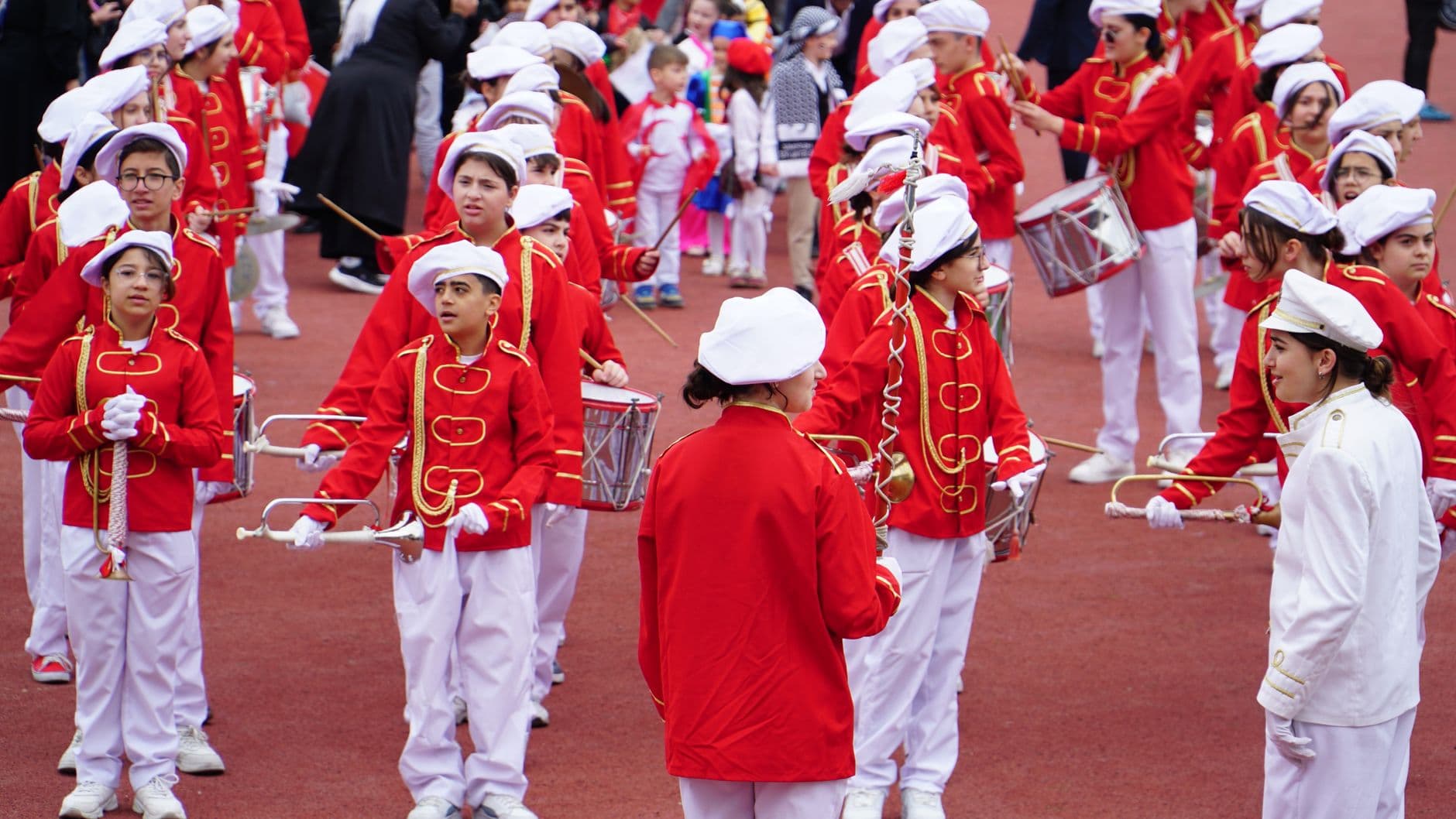
Every municipality in Norway runs a kulturskole with music, dance and art lessons for children and young people after school; it costs a fee per term and popular instruments often have a waiting list. Many schools also have a skolekorps, a brass and wind band run by parent volunteers, which marches in the parade on 17 May and raises money through dugnad. Instruments can often be borrowed or rented from the band.
- 1
Jeg vil gjerne lære å spille gitar.
I'd like to learn to play the guitar.
- 2
Datteren min spiller piano.
My daughter plays the piano.
- 3
Kan sønnen min begynne på kulturskolen?
Can my son start at the kulturskole?
- 4
Er det venteliste?
Is there a waiting list?
- 5
Hva koster det per semester?
How much is it per term?
- 6
Hun spiller i skolekorpset.
She plays in the school band.
- 7
Korpset går i tog på 17. mai.
The band marches in the parade on 17 May.
- 8
Han øver hver dag etter skolen.
He practises every day after school.
- 9
Må vi kjøpe instrument selv?
Do we have to buy an instrument ourselves?
- 10
Man kan leie instrument av korpset.
You can rent an instrument from the band.
- 11
Jeg spiller litt, men jeg er ikke så flink.
I play a little, but I'm not very good.
- 12
Jeg gikk på pianotimer som barn.
I had piano lessons as a child.
- 13
Når er timene?
When are the lessons?
- 14
Timen varer i en halvtime.
The lesson lasts half an hour.
- 15
Det er konsert på torsdag.
There's a concert on Thursday.
- 16
Kan foreldrene se på?
Can parents watch?
- 17
Det er vanskelig å lese noter.
It's hard to read music.
- 18
Jeg har vondt i fingrene.
My fingers hurt.
- 19
Korpset trenger hjelp til dugnaden.
The band needs help with the dugnad.
- 20
Øvelse gjør mester.
Practice makes perfect.
Tip: a proverb