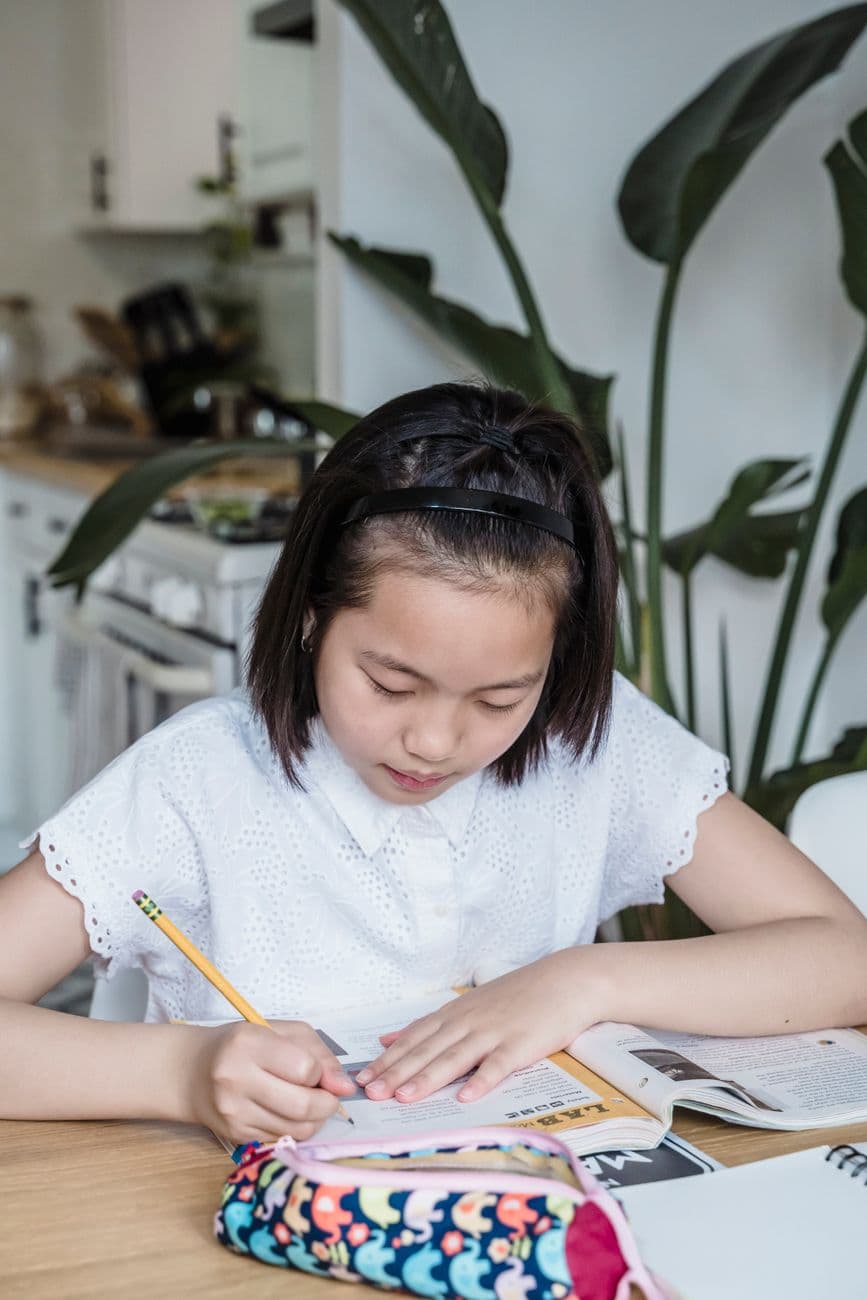
Har du gjort leksene? Homework at the Kitchen Table
Help a child with the weekly homework plan, talk to the teacher and get your own studying done.
Many Norwegian primary schools give a weekly arbeidsplan or ukeplan that lists the homework, reading and the words to practise for a test. Daily reading at home is expected in the first years, and lots of schools offer leksehjelp, free homework help after lessons. Teachers and parents usually talk through a school app or messages, and a foreldresamtale, a parent meeting with the contact teacher, happens about twice a year.
- 1
Har du gjort leksene?
Have you done your homework?
- 2
Hva har du i lekse denne uka?
What have you got for homework this week?
- 3
La oss se på arbeidsplanen.
Let's look at the weekly plan.
- 4
Hun bør lese i tjue minutter hver dag.
She should read for twenty minutes every day.
- 5
Kan du hjelpe meg med matte?
Can you help me with maths?
- 6
Jeg skjønner ikke denne oppgaven.
I don't understand this task.
- 7
Les spørsmålet høyt.
Read the question out loud.
- 8
Prøv igjen, du er nesten der!
Try again, you're almost there!
- 9
Jeg må øve på glosene til prøven.
I have to practise the words for the test.
- 10
Når er prøven?
When is the test?
- 11
Skru av TV-en mens du gjør lekser.
Turn off the TV while you do your homework.
- 12
Ta en kort pause og fortsett etterpå.
Take a short break and carry on afterwards.
- 13
Finnes det leksehjelp på skolen?
Is there homework help at school?
- 14
Jeg glemte boka på skolen.
I forgot my book at school.
- 15
Den skal leveres på fredag.
It's due on Friday.
- 16
Jeg ser over den før du leverer den.
I'll look it over before you hand it in.
- 17
Bra jobbet, du har jobbet hardt!
Well done, you've worked hard!
- 18
Jeg leser best på biblioteket.
I study best at the library.
- 19
Vi har prøve neste uke, så jeg må repetere.
We have a test next week, so I need to revise.
- 20
Kan jeg sende deg en melding hvis noe er uklart?
Can I send you a message if something's unclear?