Opinions Around the Barbecue
Say what you like, how you want your meat and what you really think at a casual French barbecue.
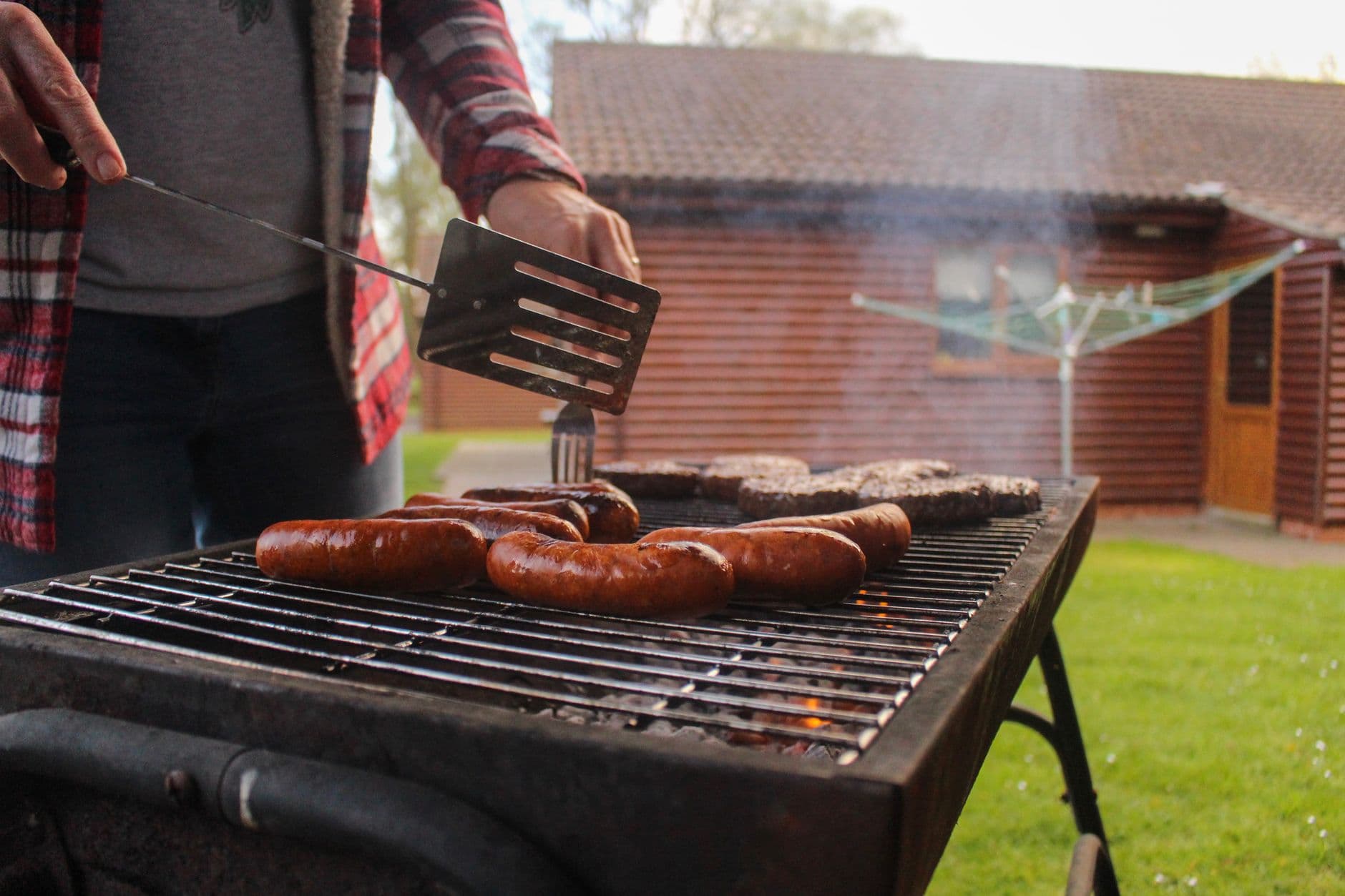
A summer barbecue in a friend's garden in France: everyone has views on how the meat is cooked, on charcoal versus gas, and on who eats what. Among friends you say tu and drop the 'ne' in speech (« je mange pas de viande »). Grilled sausages like merguez are barbecue classics, and 'bien cuit', 'à point' and 'saignant' are the usual words for doneness. Coriander (la coriandre) is the herb that divides people in France too.
- 1
Je trouve ça délicieux.
I think it tastes great.
- 2
Un peu trop salé pour moi.
A little too salty for me.
- 3
C'est piquant ?
Is it spicy?
Tip: Means hot with chilli; it is not the word for a strong flavour in general.
- 4
Juste un peu.
Only a little.
- 5
C'est trop pour moi.
That's too much for me.
- 6
J'en fais une plus douce aussi.
I'll make a milder one too.
Tip: One small word stands in for the sauce you are making more of.
- 7
Oh, c'est pas la peine.
You don't have to. (to a friend)
- 8
Ça me dérange pas du tout.
It's no trouble.
Tip: Literally this says it doesn't bother me; the 'ne' is dropped in speech.
- 9
Moi, je la veux bien cuite.
I like mine well done.
Tip: The pronoun stands for the meat, which is feminine in French.
- 10
Moi, je la préfère rosée à l'intérieur.
I prefer it pink inside.
- 11
C'est exactement comme je l'aime.
That's exactly how I like it.
- 12
Je mange pas de viande.
I don't eat meat.
Tip: After a negative, the 'some' article shrinks to a bare 'de'.
- 13
Je suis végétarien.
I'm a vegetarian.
Tip: No article before the word, as with jobs. A woman adds -ne at the end.
- 14
Y a quelque chose sans viande ?
Is there anything without meat?
- 15
Je mange de tout.
I'll eat anything.
- 16
J'ai pas tellement faim.
I'm not that hungry.
Tip: French says 'have hunger', not 'be hungry'.
- 17
Juste un petit peu, merci.
Just a little, thanks.
- 18
C'est largement assez.
That's plenty.
- 19
Je peux en reprendre un peu ?
Could I have some more?
Tip: The word for 'some of it' sits right before the verb.
- 20
Le charbon de bois, c'est meilleur, je trouve.
Charcoal tastes better, I think.
Tip: Charcoal here is literally wood coal.
- 21
Le gaz, c'est plus facile, par contre.
Gas is easier, though.
- 22
Chacun fait à sa façon.
Everyone has their own way.
- 23
Ici, c'est toi l'expert.
You're the expert here. (to a friend)
- 24
Moi, j'aurais jamais fait comme ça.
I would never have done it that way.
- 25
Mais ça a marché.
But it worked.
- 26
Le fait maison, c'est toujours mieux.
Homemade is always better.
Tip: Here 'better' is the adverb form, not the adjective you use before a noun.
- 27
Pas forcément.
Not necessarily.
- 28
C'est vrai.
That's true.
- 29
J'ai changé d'avis.
I've changed my mind.
Tip: French changes its 'opinion', not its 'mind'.
- 30
Et toi, t'en penses quoi ?
What do you think? (to a friend)
- 31
Tu aimes la coriandre ?
Do you like coriander?
Tip: French has one word for the herb, and it sounds like the British English one.
- 32
Non, pas du tout.
No, I really don't.
- 33
Y en a qui supportent pas ça.
Some people can't stand it.
Tip: The verb here means to put up with, not to support.
- 34
Apparemment, c'est génétique.
It's genetic, apparently.
- 35
Ça explique beaucoup de choses.
That explains a lot.
- 36
C'est quoi ton plat préféré ?
What's your favorite dish? (to a friend)
- 37
Un truc tout simple.
Something simple.
Tip: A very common casual word for a thing.
- 38
Le plus simple, c'est le plus difficile.
Simple is hardest.
- 39
Très juste.
That's very true.
- 40
Qui t'a appris à cuisiner ?
Who taught you to cook? (to a friend)
- 41
Mon père, surtout.
My dad, mostly.
- 42
Ça se voit.
You can tell.
- 43
C'est gentil de dire ça.
That's a nice thing to say.
- 44
Je le pensais vraiment.
I meant it.
- 45
Le meilleur barbecue de l'été.
Best barbecue of the summer.
Tip: The French for the best is not 'le plus bon'.
- 46
Merci pour le dîner.
Thanks for dinner.